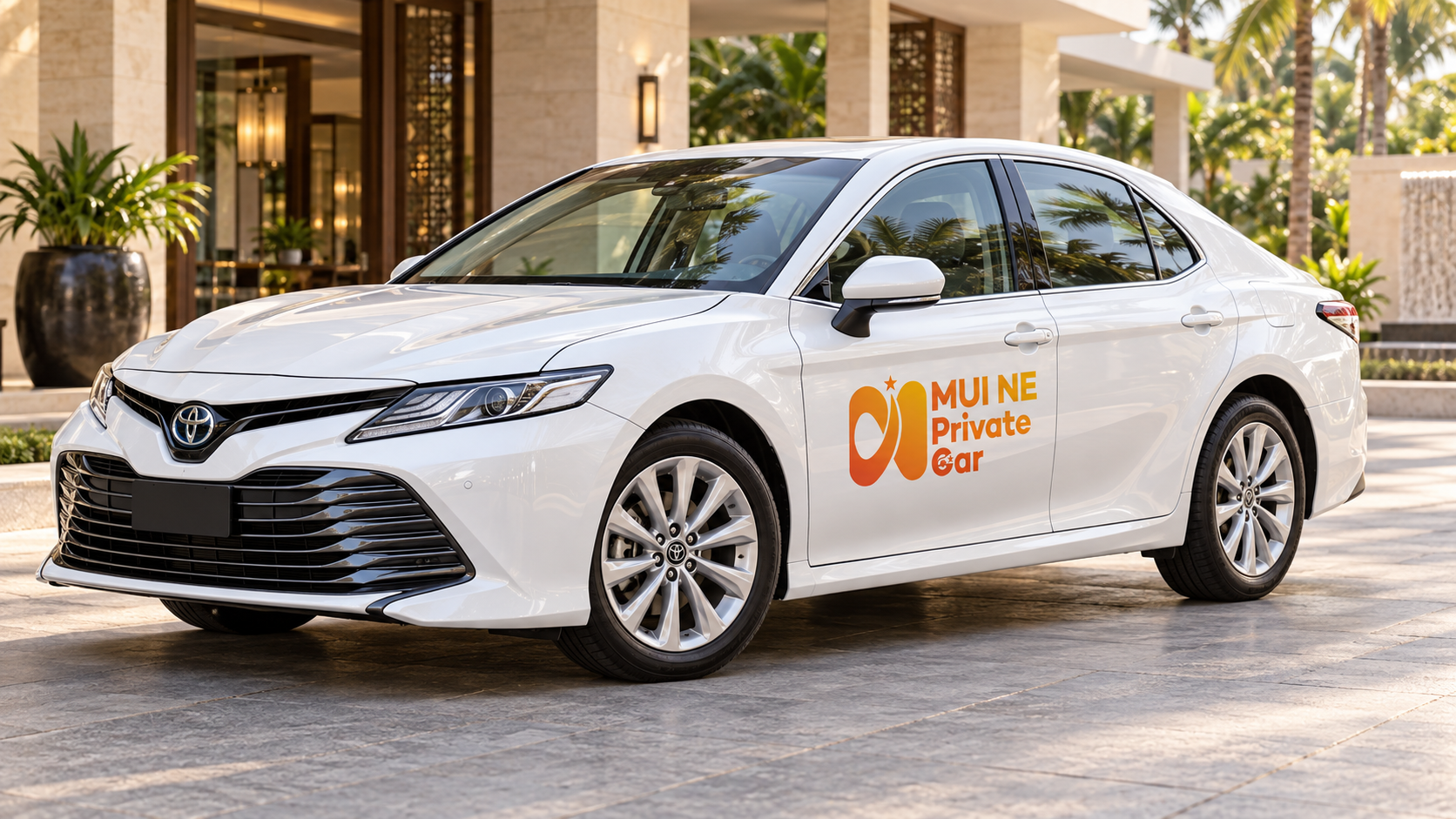
Mu Cang Chai to Sapa Private Car Transfer
Why return to Hanoi when Sapa is only 141 km away by road? Our private car service from Mu Cang Chai to Sapa solves the connectivity issue that often confuses many travelers when planning a visit to both of Vietnam’s famous mountain tourist destinations. Most transportation options from Mu Cang Chai head back toward Yen Bai and Hanoi, following the route travelers typically take to reach the terraced rice fields, while direct routes westward to Sapa are very difficult to arrange. Independent travel may mean you have to return to Hanoi before embarking on a separate trip to the northwest, adding unnecessary travel time and requiring yet another booking.
Rather than that, why not book a private transfer through Mui Ne Private Car ? Your driver will take you directly across the mountains via the Khau Pha and O Quy Ho passes, covering the 141-km journey without any detours or the need to change transportation along the way.
Book via WhatsApp: +84 979 716 700 / +84 976 694 384
Website to Booking: www.muineprivatecar.net
Trip Snapshot
|
Distance |
~141 km (88 miles) |
|
Driving time |
~3 hours 35 minutes (closer to 4.5 hours with a rest stop) |
|
Main roads |
Khau Pha Pass via Tu Le · QL32 through Than Uyen · QL4D over O Quy Ho Pass into Sapa |
|
Suggested departure |
Before 8:00 AM for the best chance of sea-of-cloud views on Khau Pha · any hour on request |
|
Pickup points |
Mu Cang Chai town hotels & homestays · La Pan Tan & Che Cu Nha terraced-field viewpoints · Tu Le village on request |
|
Drop-off points |
Sapa town centre hotels · Fansipan Legend cable car station · Sapa homestays on request |
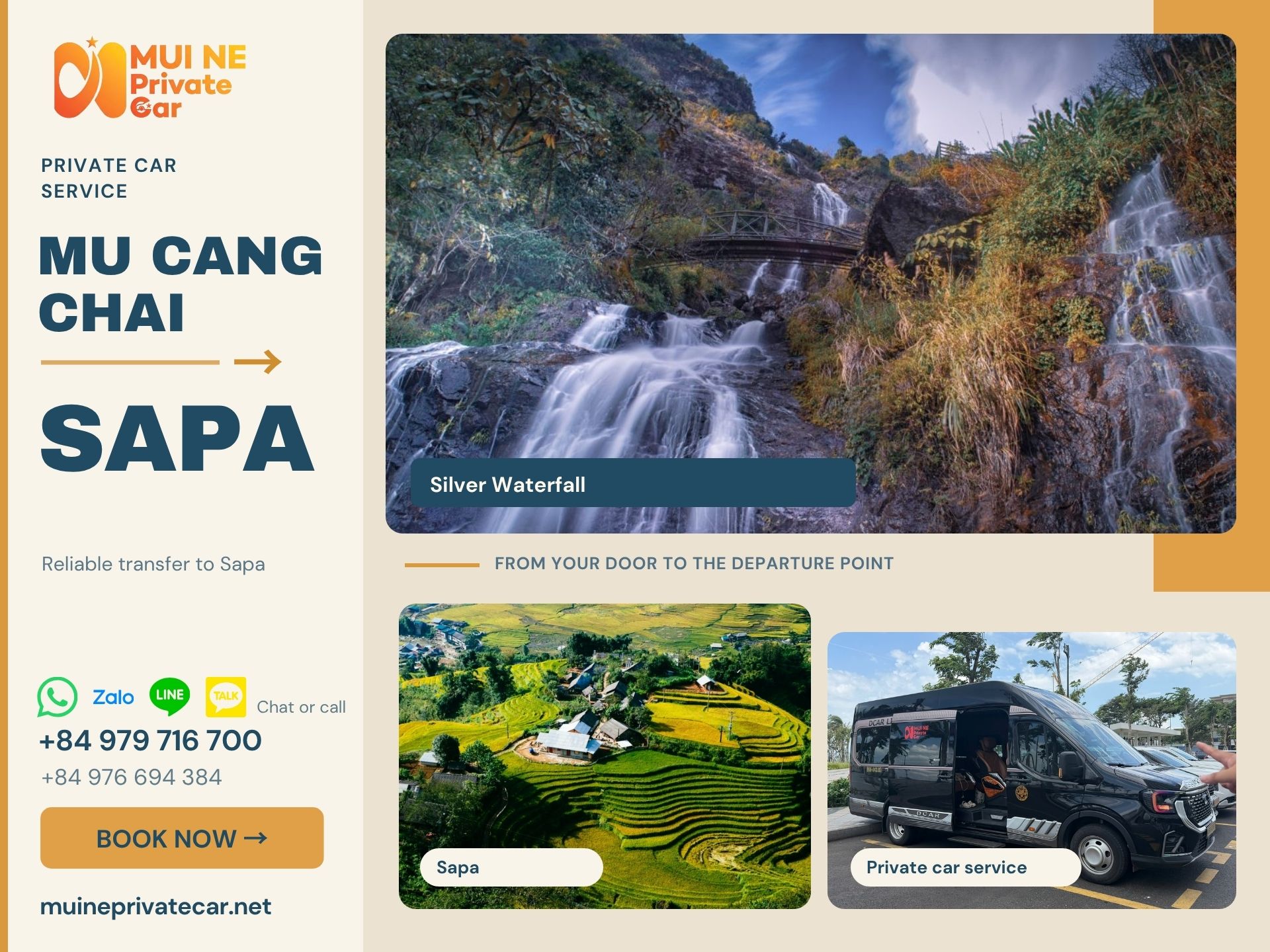
Chauffeur-driven ride from Mu Cang Chai to Sapa – Mui Ne Private Car
Why Traveling by Private Car Makes This Journey So Much Easier
Most tourists visit Mu Cang Chai primarily to see the terraced rice fields; they arrive and depart via Yen Bai or directly from Hanoi, and the local transportation infrastructure clearly reflects that single purpose. Continuing on to Sapa is a perfectly logical next stop on a Northern Vietnam itinerary, but this isn’t a route that the public bus network is really designed to serve directly.
Hiring a private driver to travel directly through this area will solve the problem neatly. Instead of enduring a long bus ride back to Hanoi and then transferring to another mode of transportation to reach Sapa, a private car will take you straight through both mountain passes, taking less than half the time of that circuitous route.
Additionally, taking this route offers real scenic benefits compared to avoiding it. A private taxi departing early can take you to Khau Pha Pass at the best time for photos - when clouds are still gathered in the valleys below - before continuing on to enjoy the views of the O Quy Ho Plateau later in the day.
Timing tip: Leaving Mu Cang Chai before 8 AM gives the best odds of catching the sea-of-cloud effect on Khau Pha Pass, which typically clears by mid-morning.
Choose Your Vehicle
Three and a half hours over two mountain passes is comfortable in any of these. Choose by group size and how much is travelling with you.

Sedan · 4 seats
1–3 passengers · 2 suitcases + 2 handbags. A comfortable, affordable choice for a solo traveller or a couple.
Medium SUV · 7 seats
1–4 passengers · 3 suitcases + 2 handbags. Higher ride height that many guests prefer on the passes.
Large SUV · 7 seats
1–5 passengers · 4 suitcases + 2 handbags. Extra stability and space for a family with camera gear.
Van · 16 seats
1–12 passengers · 8 suitcases + 6 handbags. Built for photography groups and larger parties travelling together.
On the Road: Mu Cang Chai to Sapa in Four Stages
Kilometre marks are approximate. Your driver will pace both passes for comfort and for the views.
Stage 1 - Mu Cang Chai over Khau Pha Pass to Tu Le km 0 – 31
When leaving Mu Cang Chai early in the morning, the terraced rice fields surrounding the town are often still half-shrouded in morning mist; the terraces appear and then disappear as the car gradually climbs out of the valley. This first hour is well worth the effort of setting out earlier than on most other stretches of the journey.
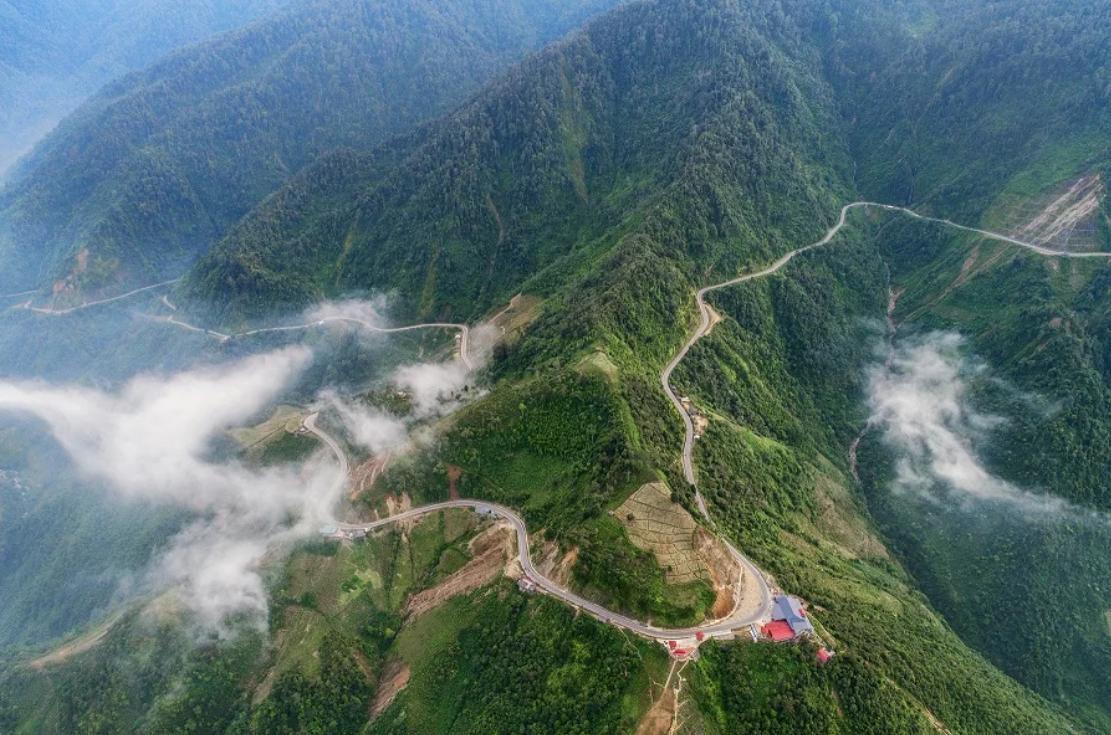
The road begins to climb almost immediately toward Khau Pha Pass, one of Vietnam’s four largest mountain passes, with cloud forests gradually enveloping the landscape and temperatures dropping noticeably as the elevation rises. On a clear morning, the valleys below are filled with a veritable sea of clouds, visible from several overlooks near the pass’s summit.
The descent on the other side gently leads the car down toward Tu Le, a valley village famous for its terraced rice fields and a local variety of glutinous rice; this stretch is much easier to drive than the previous climb.
Stage 2 - Tu Le to Than Uyen km 31 – 71
Past Tu Le, the valley widens and the terraced fields gradually give way to flatter rice paddies as the road winds from Yen Bai into Lao Cai Province; the H’mong villages on the steep slopes are gradually replaced by Thai communities living closer to the valley floor.
This is the most pleasant stretch of the entire journey - a wide road that winds gently through open countryside, offering a relaxing break for both the driver and passengers between the two major mountain passes.
Than Uyen is a modest district town, a natural stop to stretch your legs or enjoy a cup of coffee before the road turns north and begins climbing again toward Tam Duong and O Quy Ho.
Stage 3 - Than Uyen to the Foot of O Quy Ho km 71 – 111
North of Than Uyen, tea plantations begin to reappear on the hillsides around Tam Duong - a marked change from the predominantly rice-growing valleys further south and a sign that the road is approaching the highlands of Lai Chau.
Traffic on this stretch is generally light, with the road climbing gradually rather than steeply for most of its length, making for an easy final stretch before reaching the second major pass of the day.
As Tam Duong gradually recedes into the distance, the road becomes noticeably steeper and zigzagging curves begin to appear, with the Hoang Lien Son Range towering directly ahead - an unmistakable sign that O Quy Ho Pass is just around the corner.
Stage 4 - O Quy Ho Pass into Sapa km 111 – 141
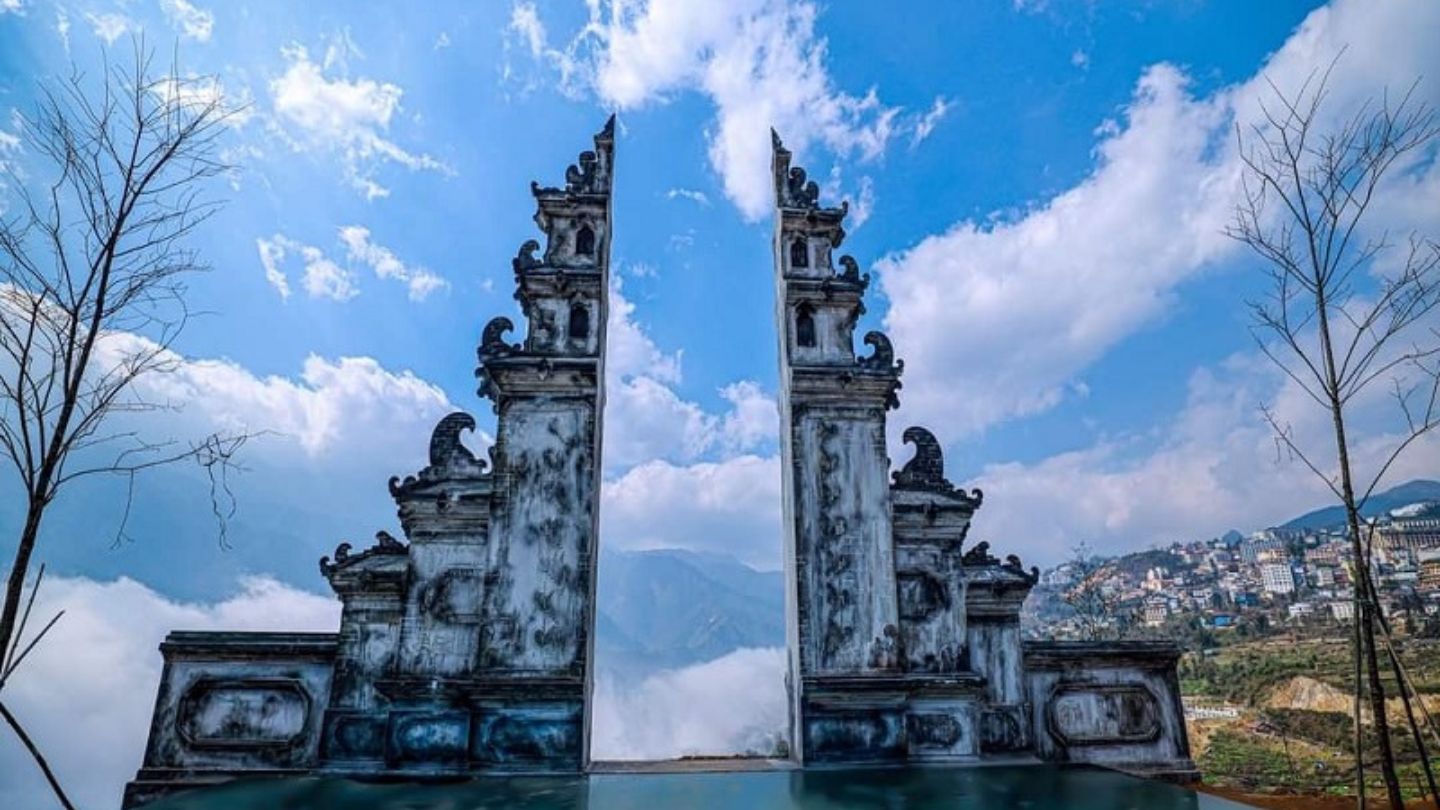
O Quy Ho, also known as Heaven’s Gate, is the higher of the two mountain passes on this route, with an elevation exceeding 2,000 meters and featuring the sharpest zigzag curves of the entire journey. From the viewpoint at the summit of the pass, visitors can look back at the valley they have just traversed and gaze toward the Sapa side of the mountain range.
On a clear afternoon, the peak of Fansipan - Vietnam’s highest mountain, rising above the surrounding ranges - can occasionally be seen from this stretch of road; however, fog is quite common here, so catching a glimpse of the peak is truly a matter of luck rather than a certainty.
The final descent brings the vehicle back to the terraced fields surrounding the town of Sapa, where the plots are smaller and more meticulously cultivated than the vast fields left behind near Mu Cang Chai. The driver will then take you into Sapa town or to the Fansipan cable car station, completing the entire 141-km journey without having to return via Hanoi.
Route Map: Mu Cang Chai to Sapa via Khau Pha Pass, Than Uyen & O Quy Ho Pass
Notable Stops Along the Way
Khau Pha Pass Viewpoint Near the start
A well-known lookout near the pass summit, famous for sea-of-cloud views on clear mornings and considered one of the best photo stops in northern Vietnam. It sits directly on the route not far out of Mu Cang Chai, so a stop costs only 15 to 20 minutes, longer if the clouds are cooperating.
Tu Le Village On the route
A small valley village known for its own terraced fields and a local sticky rice variety used in a regional sweet dessert sold at roadside stalls. It sits directly on the route just past the Khau Pha descent, so a short break here adds only 15 to 20 minutes.
O Quy Ho Pass (Heaven's Gate) Near the destination
One of Vietnam's four great mountain passes, with a summit viewing area looking back toward Lai Chau and ahead toward Sapa. It sits directly on the route just before arrival, so a stop costs only 10 to 15 minutes.
About stops & pricing: Fares on this page cover the direct Mu Cang Chai to Sapa run. A longer stop at any of these points may carry a small surcharge depending on timing. Message us before booking and we will give you one clear total for exactly the journey you want.
About Mui Ne Private Car
Mui Ne Private Car arranges chauffeur-driven transfers across Vietnam for travellers who want the direct route between two destinations, not the backtrack that public transport often forces. Mu Cang Chai to Sapa is one of our more scenic northern crossings, and travellers continuing their itinerary west are among our most regular guests on it.
Experienced Drivers on Both Mountain Passes
Our drivers are very familiar with the Khau Pha and O Quy Ho mountain passes, including the locations of the best scenic viewpoints, how the clouds typically move in the morning, and how to adjust speed when traversing the two passes back-to-back without making the trip boring or tiring.
Vehicles Suited for Mountain Driving Conditions
Each vehicle is equipped with air conditioning, is well-maintained, and offers a comfortable ride for a journey with such significant elevation changes, featuring ample space for luggage and photography equipment. Bottled water is provided for each passenger.
A Fixed Price for the Entire Journey
The fare includes fuel costs and toll fees for the entire route. Any additional stops beyond those included in the fare will be priced and agreed upon before departure, so there will be no surprises on the mountain road.
Ready for Photography Groups and Families
Child seats and booster seats are provided free of charge upon request; simply let us know your child’s age when booking. For large groups, our 16-seat van will ensure everyone and their luggage travel together throughout the trip.
24/7 Support Service
Weather changes, plans change, pickup times change? Message us via WhatsApp or Zalo at any time, and we’ll adjust pickup or drop-off times accordingly.
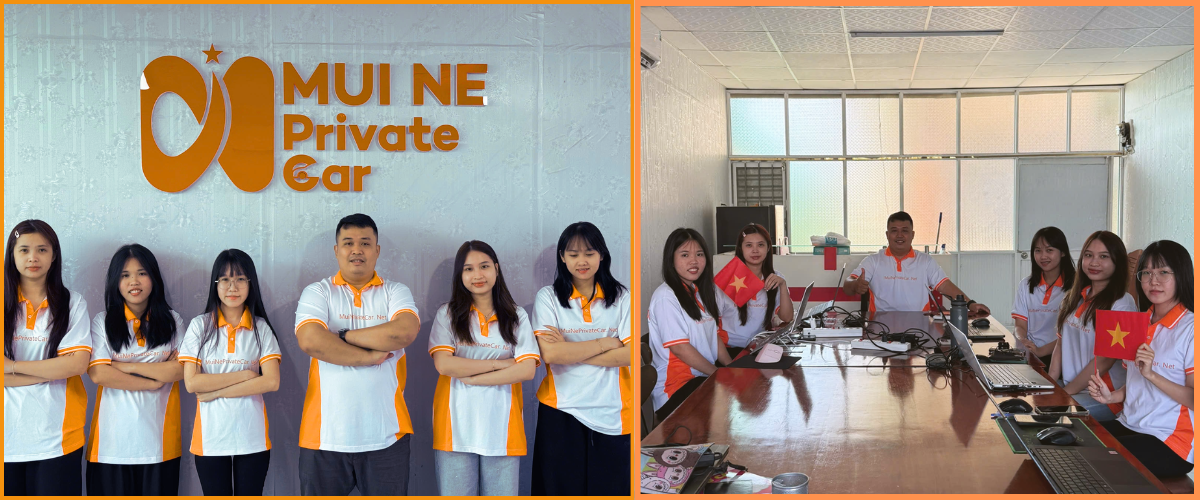
Our drivers and support staff – ready for every mountain journey
What's Included
-
Private, air-conditioned vehicle for the full 141 km
-
Experienced driver familiar with both Khau Pha and O Quy Ho passes
-
Fuel and all road toll fees
-
Door-to-door pickup and drop-off as agreed at booking
-
Photo stops at the main pass viewpoints on request
-
Bottled water for every passenger
-
One mid-journey rest stop on request
-
30 minutes of free waiting time at pickup
What's Not Included
-
Meals, drinks and personal spending along the way
-
Entrance or guide fees at La Pan Tan, Che Cu Nha or other viewpoints
-
Fansipan cable car tickets on arrival in Sapa
-
Surcharges for extra stops or detours (quoted in advance)
-
Waiting time beyond the free window at pickup or during your stop (quoted on request)
-
Driver tip (optional and always appreciated)
Cancellation Policy
-
Free cancellation: Let us know at least 24 hours before your pickup time and you receive a full refund.
-
50% charge: Cancelling less than 24 hours before departure incurs half of the fare.
-
No refund: If you do not show up and have not contacted us, the full fare applies.
Frequently Asked Questions: Mu Cang Chai to Sapa
Q1: How long does a private car take from Mu Cang Chai to Sapa?
A: About 3 hours 35 minutes for the 141 km, crossing Khau Pha Pass and O Quy Ho Pass along the way. Add 20 to 30 minutes for a rest stop.
Q2: Is there a direct bus from Mu Cang Chai to Sapa?
A: No reliable direct service exists. Mu Cang Chai's bus connections run mainly back toward Yen Bai and Hanoi, so reaching Sapa by public transport usually means a long backtrack. A private car covers the direct route without it.
Q3: How many mountain passes does this route cross?
A: Two: Khau Pha Pass not long after leaving Mu Cang Chai, and O Quy Ho Pass closer to Sapa. Your driver paces both for comfort rather than speed.
Q4: How much does the transfer cost?
A: Per vehicle, one way: $85 for a sedan, $95 for a medium SUV, $100 for a large SUV and $125 for a 16-seat van. Fuel and road tolls are included.
Q5: Which vehicle should I choose?
A: A sedan suits one to three passengers with light bags. A medium or large SUV adds ride height many guests prefer on the switchbacks, and the 16-seat van suits larger photography groups.
Q6: Can we visit La Pan Tan or Che Cu Nha before leaving Mu Cang Chai?
A: Yes. Both viewpoints sit just outside Mu Cang Chai town, so a stop on the way out costs very little extra time. Mention it when you book so your driver can plan the pickup time around it.
Q7: What time should we leave for the best views over Khau Pha Pass?
A: An early departure, ideally before 8 AM, gives the best chance of catching the sea-of-cloud views, since the cloud layer typically clears by mid-morning. A later departure still crosses the same scenery, just with less chance of the cloud effect.
Book Your Mu Cang Chai to Sapa Private Transfer Today
Whether you are chasing clear views over two of Vietnam's great mountain passes, or simply want the most direct way to continue your trip west, a private driver from Mu Cang Chai to Sapa gives you a fixed price, a comfortable pace and a vehicle that goes exactly where you need it to. Send us your hotel name, your date and time, and the number of passengers and bags. We reply quickly with a confirmed quote.
-
Hotline / Zalo / WhatsApp / Viber: +84 979 716 700 / +84 976 694 384
-
Email: muineprivatecarservice@gmail.com
-
Online Booking: www.muineprivatecar.net
For last-minute requests, WhatsApp or Zalo is the quickest route. Our team answers around the clock.